An air conditioning system that runs all summer without a hiccup does not happen by accident. It is the result of regular attention to the small details that keep equipment operating the way the manufacturer intended. When a South Dennis property owner skips maintenance, problems build quietly until a hot July afternoon exposes them. Refrigerant charge drifts out of range, coils cake with grime, and electrical connections loosen. By the time the system shuts down, the repair costs far more than the upkeep that would have prevented it.
Cape Cod Mechanical Systems LLC is your locally owned and operated HVAC, plumbing and electrical specialist. We combine essential services into a single source of expertise and reliability. On this page we focus on what routine AC maintenance in South Dennis, MA actually involves, why it matters for the equipment you depend on, and how our approach protects your comfort through the demanding coastal cooling season.
What Regular AC Maintenance Accomplishes
Maintenance is not a single task. It is a coordinated inspection and tune-up of every component that affects cooling performance, efficiency, and reliability. Over a season of use, an air conditioner accumulates wear that is invisible during normal operation. Dust settles on the evaporator coil and reduces heat transfer. The condenser coil outdoors collects leaves, grass clippings, and salt residue common in Cape Cod’s coastal air. Capacitors weaken. Contactors pit. Each of these problems chips away at capacity until the system struggles to hold a set temperature.
When we service a unit, we restore it closer to factory performance. Clean coils move heat efficiently again. A properly charged refrigerant loop reaches the correct pressures and temperatures. Tight electrical connections draw the right amperage. The combined effect is lower energy use, steadier indoor temperatures, and a longer service life for the compressor, which is the most expensive part of any cooling system. In practical terms, maintenance turns a reactive relationship with your equipment into a predictable one.
Our Maintenance Process Step by Step
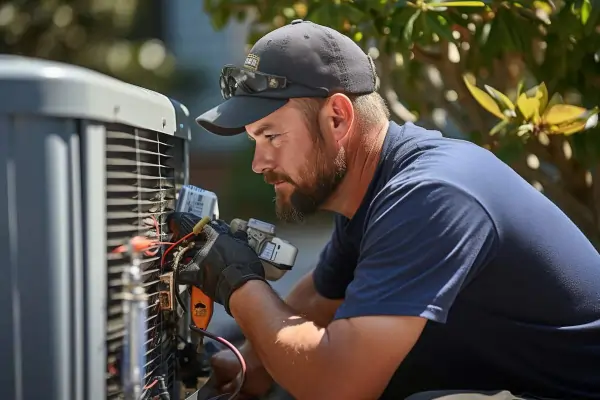
We follow a consistent methodology so that nothing is overlooked. Every technician who visits a South Dennis property works through the same core checks, then adjusts based on the specific type of equipment and the conditions we find. This structure produces repeatable results whether we are servicing a central split system, a heat pump, or a ductless configuration.
- Inspect and clean the coils: We check both the indoor evaporator coil and the outdoor condenser coil, then clean away dirt, debris, and salt buildup that block heat transfer.
- Verify refrigerant charge: We measure suction and discharge pressures against the manufacturer specifications and check superheat and subcooling to confirm the charge is correct.
- Test electrical components: We measure capacitor microfarads, inspect the contactor, tighten terminal connections, and confirm that motors draw current within their rated range.
- Check airflow: We inspect or replace the air filter, examine the blower wheel, and confirm the duct system delivers adequate airflow across the coil.
- Clear the condensate drain: We flush the drain line and pan to prevent clogs that cause water damage or trigger a safety shutoff.
- Calibrate the thermostat: We confirm that the thermostat reads accurately and that the system cycles on and off at the correct set points.
After the mechanical work is complete, we run the system through a full cooling cycle and record temperature split across the coil. A properly functioning air conditioner typically produces a supply-to-return temperature difference in the range of eighteen to twenty-two degrees. If the reading falls outside that band, we investigate further before we consider the visit finished. This final verification step separates a real tune-up from a superficial once-over.
Technical Details That Affect Cooling Performance
Understanding a few specifications helps explain why maintenance produces measurable benefits. Refrigerant charge is the clearest example. A system undercharged by even ten percent loses a significant portion of its cooling capacity and forces the compressor to run longer to reach the target temperature. An overcharged system raises head pressure and shortens compressor life. Neither condition is visible from the outside, which is why we rely on gauge readings rather than assumptions.
Airflow is equally important. Manufacturers design most residential systems around roughly four hundred cubic feet per minute of airflow per ton of cooling. When a filter clogs or a duct collapses, airflow drops, the evaporator coil grows too cold, and ice can form on the coil surface. That ice blocks airflow entirely and can lead to liquid refrigerant returning to the compressor, a condition that causes serious internal damage. Regular filter service and duct inspection prevent this chain of events before it starts.
Electrical health rounds out the picture. Capacitors provide the starting torque that motors need. As a capacitor ages, its capacitance falls below the rated value, and the motor works harder to start. This raises operating temperature and current draw, which accelerates wear on both the motor and the capacitor itself. Catching a weak capacitor during a routine visit costs a fraction of what a failed compressor motor would.
Where Maintenance Makes the Biggest Difference
Different properties place different demands on their cooling equipment, and maintenance plans should reflect that. A year-round South Dennis home with occupants throughout the summer runs its system heavily and benefits from annual service before the cooling season begins. A seasonal or rental property that sits empty for months faces a different risk profile, since dust and pests accumulate while the system is idle and the first startup of the season can expose problems.
Commercial and light commercial buildings depend on cooling not only for comfort but for the protection of inventory, equipment, and business operations. A restaurant kitchen, a retail space, or a medical office cannot tolerate an unexpected cooling failure during peak hours. For these clients, scheduled maintenance is a form of risk management. We track the condition of each unit over time so that we can recommend component replacement on a planned basis rather than reacting to emergency breakdowns. That predictability protects both the budget and the operation.
Coastal exposure adds a factor that inland properties do not face. Salt in the air corrodes condenser coils, fasteners, and electrical contacts more quickly than in drier climates. Properties near the water in South Dennis often need more frequent coil cleaning and corrosion inspection to keep equipment healthy. We take this local reality into account when we build a maintenance schedule, because the environment your equipment lives in shapes how often it needs care.
Why Choose Cape Cod Mechanical Systems LLC
Fully licensed, insured and knowledgeable in all aspects of residential, commercial and light commercial requirements, we continue 35 years of exceptional customer care, conscientious job performance and 24/7 assistance throughout Provincetown, Cape Cod, and Hyannis. That combination of experience and breadth matters when you rely on a single company for HVAC, plumbing, and electrical needs. A maintenance visit that uncovers an electrical concern or a condensate drainage issue can be resolved by the same team, without the delay of coordinating separate contractors.
Our technicians treat each maintenance appointment as an opportunity to extend the life of your investment and to spot small issues before they grow. We document what we find, explain it in plain language, and make recommendations based on the actual condition of your equipment rather than a fixed script. When you schedule AC maintenance with Cape Cod Mechanical Systems LLC, you gain a partner who understands the coastal climate, the equipment, and the practical demands of keeping a South Dennis property comfortable through the hottest weeks of the year.
Whether you own a single-family home, manage a seasonal rental, or operate a commercial facility, regular attention to your cooling system pays off in lower energy bills, fewer surprise repairs, and steady comfort when you need it most. Reach out to arrange a maintenance visit and let our team keep your air conditioning running the way it was built to.