Picture a cold morning when you turn the shower handle and only cold water comes out. You check the utility closet and find a puddle around the base of the tank, or you hear a low rumbling sound that was not there last week. A water heater rarely fails at a convenient moment, and when it does, the disruption reaches every part of your daily routine — from washing dishes to doing laundry to a warm shower before work. This page explains how Cape Cod Mechanical Systems LLC approaches water heater repair in Hyannis, MA, what causes most failures, and how our team restores reliable hot water quickly and correctly.
Common Questions Homeowners Ask About Water Heater Trouble in Hyannis
When hot water disappears or arrives lukewarm, the first question we hear is whether the unit can be repaired or must be replaced. The answer depends on the age of the tank, the nature of the fault, and the condition of the internal components. A water heater that is eight years old with a failed heating element is usually a straightforward repair. A tank that is fifteen years old with corrosion and a leaking seam is a different situation, and we will explain the options clearly rather than pushing a single path.
Another frequent concern is safety. Gas water heaters involve a burner, a gas valve, and a flue that carries combustion byproducts out of the home. Electric units carry high-voltage current to the heating elements. Both types store water under pressure and heat it to temperatures that can cause scalding. These factors are why water heater repair is not a task to approach casually. Cape Cod Mechanical Systems LLC is fully licensed and insured, and our technicians understand the gas, electrical, and plumbing codes that apply to every repair we perform in Hyannis.
What Usually Goes Wrong With a Water Heater
Most water heater failures fall into a handful of recognizable categories. Understanding them helps you describe the problem when you call, and it helps our technicians arrive prepared with the right parts. Over 35 years of service across the Cape, we have seen the same patterns repeat, and we use that experience to diagnose quickly.
- No hot water: On a gas unit this often points to a failed pilot, a faulty thermocouple, or a tripped gas valve. On an electric unit it usually means a burned-out upper heating element or a tripped high-limit switch.
- Not enough hot water: This can be caused by a failed lower heating element, a thermostat set too low, sediment buildup reducing tank capacity, or a dip tube that has broken apart inside the tank.
- Rumbling or popping noises: These sounds come from sediment that has settled on the bottom of the tank. As the burner heats the steel, trapped water under the sediment boils and bubbles through the layer.
- Discolored or rusty water: This points to a depleted anode rod or internal corrosion of the tank lining, which is a warning that the tank may be nearing the end of its service life.
- Water pooling near the base: A leak from a fitting or valve can often be repaired, but a leak from the tank body itself means the unit needs replacement.
The hard, mineral-rich water common in parts of Cape Cod accelerates sediment accumulation. Homes near the coast also contend with humidity and salt air that can speed corrosion on exposed metal components. These regional factors are why we recommend periodic flushing and inspection even when no symptom is present.
How Cape Cod Mechanical Systems LLC Diagnoses and Repairs Your Water Heater
A good repair starts with an accurate diagnosis. We do not guess, and we do not replace parts hoping one of them solves the issue. Our process follows a logical sequence that confirms the root cause before any component is touched.
- Safety isolation: We shut off the gas supply or electrical circuit and confirm the unit is de-energized before any hands-on work begins.
- Visual and system inspection: We examine the tank, fittings, valves, flue, venting, and surrounding area for leaks, corrosion, scorch marks, and improper connections.
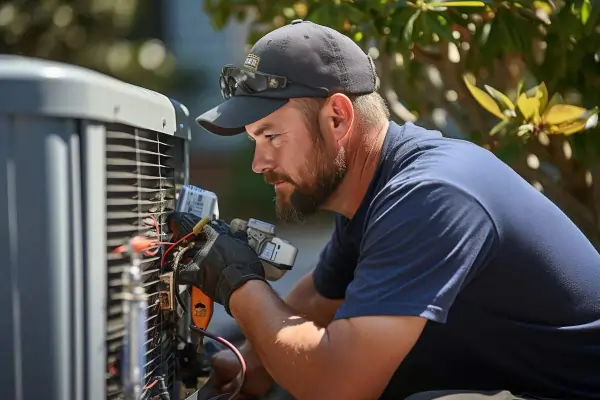
- Component testing: On electric units we test heating elements and thermostats for continuity and resistance with a multimeter. On gas units we verify the pilot, thermocouple output in millivolts, gas pressure, and burner flame quality.
- Verification of controls: We confirm the thermostat setpoint, test the high-limit safety switch, and inspect the temperature and pressure relief valve for proper operation.
- Repair and confirmation: After replacing or adjusting the faulty component, we restore power or gas, bring the tank up to temperature, and verify stable hot water delivery and correct pressure.
The temperature and pressure relief valve deserves particular attention. This device is a critical safety feature designed to release water if internal pressure or temperature exceeds safe limits, typically rated to open at 150 psi or 210 degrees Fahrenheit. A stuck or weeping relief valve is a repair we take seriously, because a failed valve on a pressurized, heated tank is a genuine hazard. Every repair we complete leaves this component working as the manufacturer intended.
Technical Details That Separate a Good Repair From a Quick Fix
Water heaters are deceptively simple in appearance but precise in their requirements. A standard residential tank in Hyannis is usually 40 or 50 gallons, with gas models rated by BTU input and electric models rated by element wattage, commonly 4,500 watts per element on a 240-volt circuit. Matching replacement parts to these ratings matters. Installing an element with the wrong wattage, or a gas valve set to the wrong pressure, produces a unit that underperforms or fails prematurely.
Several technical factors guide the quality of our work. We measure incoming gas pressure and compare it against the manufacturer specification, typically around 3.5 inches of water column for natural gas and higher for propane. We confirm the anode rod condition, since this sacrificial rod protects the steel tank from corrosion and is often overlooked until the tank itself begins to rust. We also check the flue draft on gas units to make sure combustion gases vent properly and do not spill into the living space. Each of these details affects both safety and the service life you get from the unit.
For businesses, the stakes rise. Restaurants, salons, laundromats, and lodging properties depend on consistent hot water throughout the day, and many use larger commercial units or multiple tanks in series. Cape Cod Mechanical Systems LLC handles residential, commercial, and light commercial requirements, so whether the unit is a single tank in a home or a high-demand system in a business, we bring the same methodical approach.
Serving Hyannis and the Surrounding Communities
As your locally owned and operated HVAC, plumbing, and electrical specialist, we combine these essential trades into a single source of expertise and reliability. A water heater repair often touches more than one discipline — a gas connection, a plumbing line, and an electrical circuit can all be involved in a single unit. Having technicians who understand all three under one roof means fewer handoffs and faster, cleaner results.
We provide water heater repair and related services throughout Hyannis and the nearby towns of Provincetown, Cape Cod, and Hyannis. Because we offer 24/7 assistance, a failure that happens on a weekend or late at night does not have to wait until Monday. When a tank leaks onto a finished floor or a family wakes up to no hot water, that timing matters.
Our commitment to conscientious job performance and exceptional customer care has guided three and a half decades of work across Cape Cod. When you call Cape Cod Mechanical Systems LLC for water heater repair in Hyannis, MA, you reach a team that respects your home or business, explains what we find, and restores dependable hot water the right way. If a repair is not the wisest choice for an aging or heavily corroded tank, we will tell you plainly and help you weigh your options so you can make an informed decision.