A properly sized air conditioning system in a Sandwich home should cool every room evenly, run in steady cycles rather than short bursts, and keep humidity low without freezing you out. When any of those things go wrong, the culprit is almost always a mistake made during installation. Getting the sizing, ductwork, refrigerant charge, and electrical connections correct from the start determines how well a system performs for the next 15 years. That is the standard we hold ourselves to on every AC installation across Sandwich, MA.
Cape Cod Mechanical Systems LLC is your locally owned and operated HVAC, plumbing and electrical specialist. We combine essential services into a single source of expertise and reliability. Fully licensed, insured and knowledgeable in all aspects of residential, commercial and light commercial requirements, we continue 35 years of exceptional customer care, conscientious job performance and 24/7 assistance throughout Provincetown, Cape Cod, and Hyannis.
Sizing the System Before Anything Else
The single most important step in any AC installation happens before a wrench comes out of the truck. We calculate the cooling load of your home using a Manual J heat load calculation. This process accounts for square footage, ceiling height, window count and orientation, insulation levels, air leakage, and the number of people who typically occupy the space. A house near the water in Sandwich sees different solar gain than one shaded by mature trees, and our calculations reflect those differences.
Oversizing is a common and costly error. A unit that is too large cools the air quickly but shuts off before removing enough moisture, which leaves your home feeling clammy and cold. It also cycles on and off constantly, wearing out components and driving up energy bills. An undersized unit runs nonstop and never reaches the set temperature on the hottest days. We size each system to match your actual load so it runs efficiently and comfortably.
Choosing the Right Equipment for Your Home
Sandwich homes range from historic Cape-style houses to modern construction, and no single air conditioning solution fits all of them. During your consultation, we review the options that make sense for your layout, budget, and comfort goals. The right choice depends on whether you already have ductwork, how many zones you want to control, and how important peak efficiency is to you.
Here are the main system types we install and where each one fits best:
- Central air conditioning: Ideal for homes with existing ductwork or new construction where ducts can be integrated cleanly. Provides whole-house cooling from a single condenser.
- Ductless mini-split systems: A strong fit for older homes without ducts, additions, finished attics, or rooms that never get comfortable. Each indoor unit is controlled independently.
- Heat pump systems: Deliver both cooling in summer and heating in the shoulder seasons, which makes them efficient year-round performers well suited to the Cape Cod climate.
We also help you understand efficiency ratings such as SEER2, which measures how much cooling a system delivers per unit of electricity. A higher rating typically costs more upfront but lowers operating costs over the life of the equipment. We explain the trade-offs plainly so you can make a decision that fits your household.
Our AC Installation Process
A clean installation is a series of careful steps, each of which affects the final result. We treat your home with respect throughout, protecting floors and work areas and cleaning up completely when we finish. Our technicians follow a consistent process on every job so nothing gets overlooked.
Here is what you can expect when we install your new system:
- Site assessment and load calculation: We measure your home, evaluate existing ductwork or mounting locations, and confirm the correct equipment size.
- Removal of old equipment: We disconnect and haul away the existing unit, recovering any refrigerant according to environmental regulations.
- Setting the condenser and air handler: The outdoor condenser goes on a level, stable pad, and the indoor air handler or evaporator coil is mounted for proper drainage and airflow.
- Line set and electrical connections: We run refrigerant lines, condensate drains, and dedicated electrical circuits, then verify every connection is tight and code-compliant.
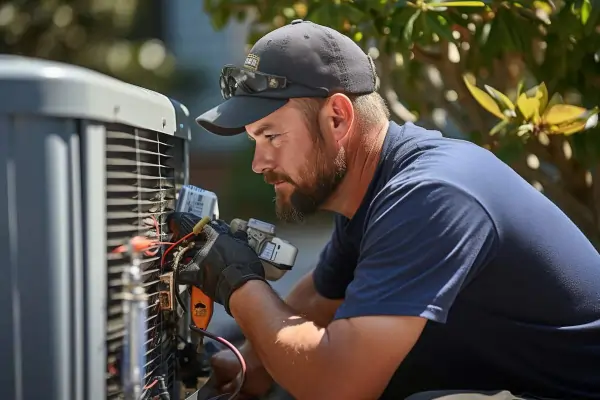
- Evacuation and charging: We pull a deep vacuum on the refrigerant lines to remove moisture and air, then charge the system to the manufacturer’s exact specification.
- Startup and testing: We power up the system, check temperature split, airflow, and pressures, and confirm the thermostat controls everything correctly.
Why Correct Refrigerant Charge Matters
Refrigerant is the working fluid that carries heat out of your home. The amount in the system must be precise. Too little refrigerant, often the result of a leak or a careless installation, reduces cooling capacity and can cause the compressor to overheat. Too much refrigerant raises pressures, wastes energy, and shortens the life of the equipment.
We weigh in the charge and verify it using superheat and subcooling measurements rather than guessing. This attention to detail is one of the reasons systems we install run reliably for years. It also protects the manufacturer warranty, since improper charging is a leading cause of denied warranty claims. When the charge is right, you get the full efficiency and capacity you paid for.
Ductwork and Airflow Considerations
Even a top-tier condenser will disappoint if the ductwork cannot move air properly. During installation we inspect existing ducts for leaks, undersized runs, and poor sealing. Leaky ducts in an attic or crawlspace can waste a large share of your conditioned air before it ever reaches a living space. We seal and, where needed, repair or resize ducts so airflow matches the capacity of the new equipment.
For homes without ducts, a ductless installation avoids these losses entirely by delivering cooled air directly into each room. We position indoor units to spread air evenly and place the outdoor condenser where noise and appearance are minimized. Balanced airflow eliminates the hot and cold spots that make older systems frustrating to live with.
Applications Across Homes and Businesses
We handle a wide range of installation projects throughout Sandwich and the surrounding Cape. In residential settings, that includes replacing aging central systems, cooling finished basements and attic conversions, and adding comfort to sunrooms and additions. For light commercial clients, we install systems for offices, retail spaces, restaurants, and rental properties where reliable cooling directly affects business operations.
Seasonal properties and vacation rentals are common on the Cape, and these present their own needs. Owners often want systems that are efficient during peak summer occupancy and easy to shut down over the winter. We tailor each installation to how the space is actually used, whether that is a year-round residence or a home occupied only during the warm months.
Ongoing Support After Installation
Our relationship does not end when the system starts running. As a single source for HVAC, plumbing, and electrical work, Cape Cod Mechanical Systems LLC can service everything we install and provide maintenance to keep it performing. Regular tune-ups protect efficiency, catch small problems early, and extend the life of your equipment. With 24/7 assistance available, help is a phone call away if something ever goes wrong on a hot night.
When you are ready to plan an AC installation in Sandwich, MA, reach out to schedule a consultation. We will assess your home, walk you through your options, and deliver a system that keeps you comfortable for years to come. Backed by 35 years of experience and a commitment to conscientious workmanship, we are ready to help you stay cool.